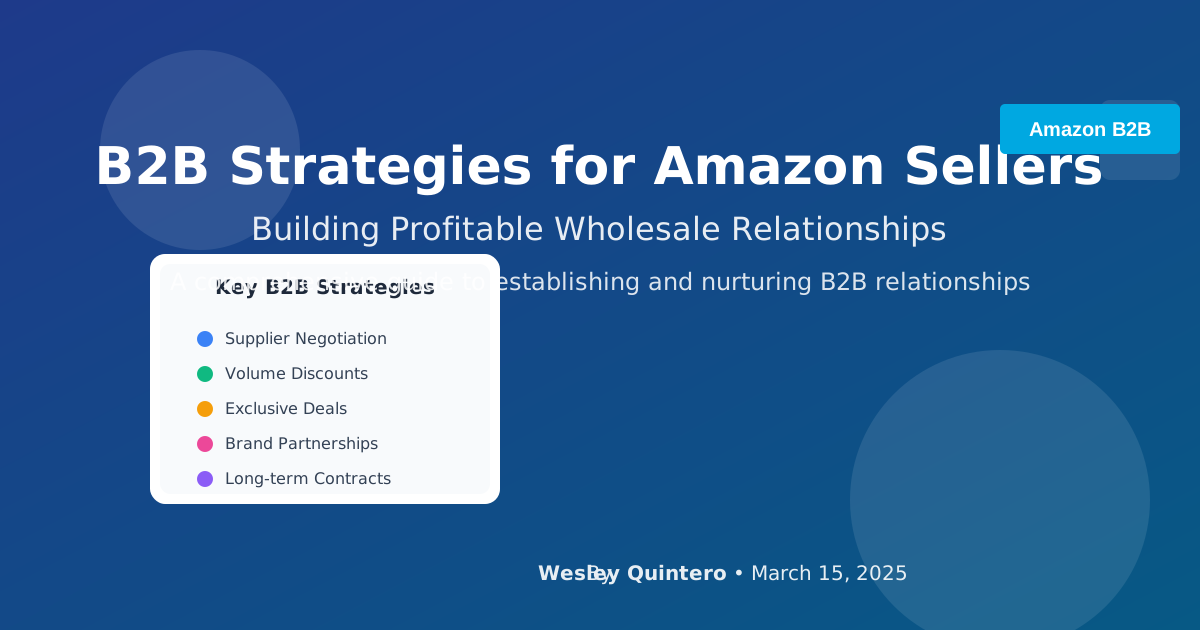
The B2B Playbook: Building a Defensible Amazon Empire
(The Premise) Why This Matters: The amateur seller fights for one customer at a time in the bloody red ocean of DTC. The professional builds systems that capture a hundred customers at once. B2B is not just another sales channel; it is a strategic decision to build a more resilient, predictable, and defensible business. This playbook provides the frameworks for that transition.
1. Wholesale Partnerships: Forging Your Supply Chain Alliance
(The Premise) Why This Matters: Relying solely on your own products leaves you vulnerable. A strategic wholesale partnership is not about reselling; it's about building a moat. It diversifies your offerings, insulates you from manufacturing delays, and allows you to leverage the established brand equity of your partners.
(The Process)
Finding the Right Wholesale Partners
Key considerations when evaluating wholesale partners:
- Product Alignment: Ensure their catalog complements your offerings
- Minimum Order Quantities: Match with your storage capacity
- Pricing Structure: Look for volume discounts
- Reliability: Check references and order fulfillment history
- Brand Reputation: Partner with respected brands
Negotiating Wholesale Agreements
Effective negotiation strategies:
- Start with smaller test orders
- Request flexible payment terms
- Negotiate tiered pricing based on volume
- Secure exclusivity when possible
- Include marketing support clauses
The Specialist's Edge (The Unspoken Rule):
Don't ask what a partner can do for you; prove what you can do for them. The ultimate leverage is to become their most valuable, data-driven Amazon partner. Create a simple weekly dashboard (using Looker Studio or even a shared Google Sheet) showing them their product's performance under your management: sales velocity, ad performance, and inventory levels. When you provide more data and insight than their own team, you are no longer a reseller; you are an indispensable strategic asset. This is how you secure exclusivity.
2. Vendor Central: Mastering the Relationship with Amazon
(The Premise) Why This Matters: Becoming a 1P vendor is a conscious choice to make Amazon itself your #1 client. This is a high-stakes game. You trade pricing control for access to Amazon's massive marketing machine (AMS, DSP) and logistical network. You are no longer a seller; you are a supplier to the world's most demanding retailer.
(The Process - The Comparison is Key)
Understanding Vendor Central vs. Seller Central
| **Feature**          | **Vendor Central**       | **Seller Central**       |
|----------------------|--------------------------|--------------------------|
| **Relationship**     | Wholesale to Amazon      | Direct to consumer      |
| **Pricing Control**  | Limited                  | Full control            |
| **Inventory Risk**   | Lower                    | Higher                  |
| **Marketing Support**| More resources           | Self-managed            |
Optimizing Your Vendor Central Performance
Best practices for Vendor Central sellers:
- Maintain strict inventory discipline (aim for 98%+ in-stock rate)
- Provide accurate lead times (update weekly)
- Optimize your product content with:
- Enhanced A+ Content
- 360° product views
- Comparison charts
- Leverage Amazon Marketing Services:
- Sponsored Display ads
- DSP campaigns
- Custom storefronts
- Monitor chargeback deductions:
- Implement automated tracking
- Dispute invalid claims within 48 hours
2024 Update: Amazon now offers Vendor Central sellers access to:
- Predictive inventory tools
- Automated replenishment
- Enhanced analytics dashboards
The Specialist's Edge (The Unspoken Rule):
Your primary war in Vendor Central is a "Colder War" fought against automated chargebacks. You must assume every PO will be audited by a merciless bot. The only defense is a proactive, automated audit trail. Use Google Apps Script or Zapier to log every PO, every ASN (Advance Ship Notice), and every chargeback into a single spreadsheet the moment it happens. When Amazon issues a chargeback six months later, you will have a timestamped, undeniable record. This isn't just defense; it's a system that makes you untouchable.
3. Bulk Selling on Seller Central: Serving the Invisible Buyer
(The Premise) Why This Matters: There is an entire class of buyers on Amazon you will never reach with lifestyle images or clever copy. These are "Business-Only" buyers: the procurement managers, the office administrators, the small business owners. They don't browse; they procure. They search for case packs, not single units. Serving them requires a completely different approach.
(The Process)
Creating Effective Bulk Listings
Key elements of successful bulk listings:
- Clear quantity options (e.g., 12-pack, case of 24)
- Professional photography
- Detailed packaging information
- Competitive unit pricing
- Strong value proposition
Marketing to B2B Buyers
Effective strategies to reach business customers:
- Amazon Business accounts:
- Set up quantity discounts
- Enable business pricing tiers
- Sponsored Products campaigns:
- Target B2B keywords
- Use negative keywords to filter consumers
- Enhanced Brand Content:
- Highlight bulk packaging
- Showcase business benefits
- External B2B marketing:
- LinkedIn advertising
- Industry newsletter features
- Trade show participation:
- Virtual booth options
- QR code lead capture
Pro Tip: Create separate B2B-focused listings with:
- Business-focused bullet points
- Wholesale application forms
- Dedicated customer support contacts
The Specialist's Edge (The Unspoken Rule):
B2B buyers search by part number. They use MPNs (Manufacturer Part Numbers) and UPCs, not fuzzy marketing terms. Your highest-leverage action is to embed these identifiers directly into your backend search terms and even prominently within your product titles and bullet points for B2B-focused ASINs. Furthermore, B2B buyers are looking for signals of professionalism and reliability. Your edge is to create a B2B-optimized brand experience within your Seller Central account.
- Create B2B-Specific A+ Content: Don't just show the product. Show pictures of the case pack, the pallet configuration, and the detailed dimensions of the shipping carton.
- Offer a Downloadable Spec Sheet: Use a link in your A+ Content to a PDF on your own brand website that contains all technical specifications, compliance info, and wholesale inquiries contact.
- Use Business-Only Language: In your titles and bullets for B2B-specific ASINs, use terms like "Case of 24," "Contractor Pack," or "For Commercial Use." This signals to business buyers that you speak their language.
Conclusion
Escaping the DTC red ocean requires building a multi-faceted B2B strategy. By forging robust wholesale partnerships, strategically leveraging Vendor Central, and adopting a distributor mindset for bulk sales, you transform your business from a fragile storefront into a resilient, defensible fortress.