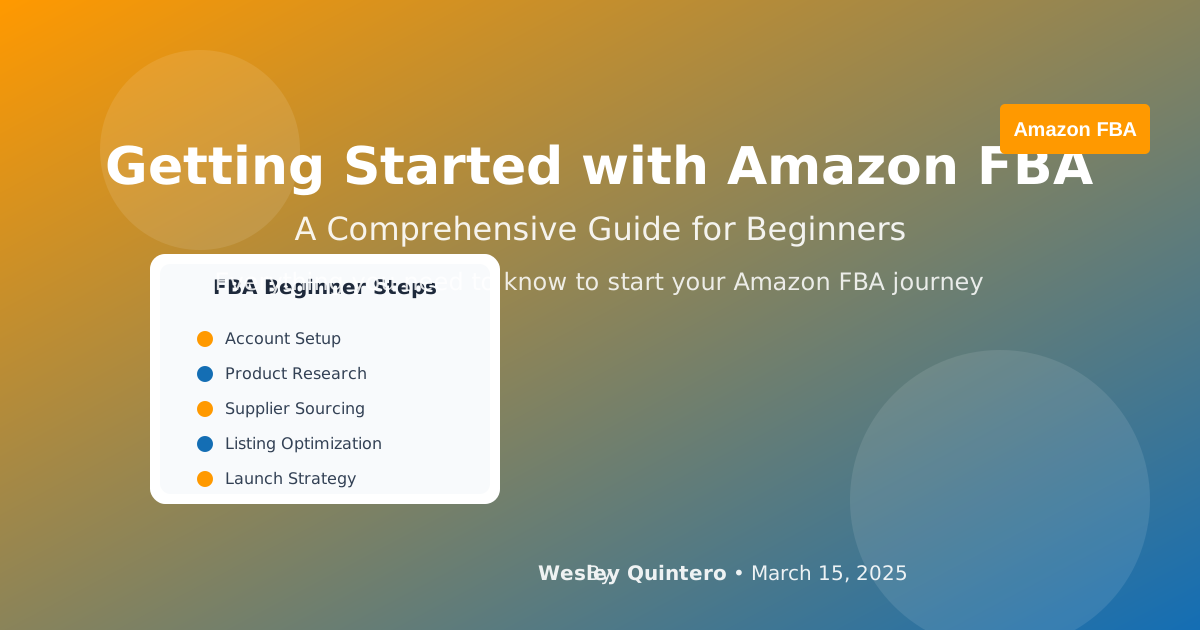
The FBA Playbook: Architecting Your Logistics Engine
(The Premise) Why This Matters: The amateur seller is buried in a mountain of boxes, packing tape, and shipping labels in their garage. The professional outsources their logistics war to a global army. Fulfillment by Amazon (FBA) is not just a shipping service; it's a strategic decision to leverage the world's most advanced fulfillment network, trade margin for scale, and instantly acquire the trust that takes years to build.
1. The Foundation: Architecting Your Seller Account
(The Premise) Why This Matters: Your Seller Account is not a profile; it is the deed to your digital real estate. Setting it up correctly from day one is the cheapest insurance you will ever buy against months of future, soul-crushing administrative headaches.
(The Core Content - The Process)
- Go to
sellercentral.amazon.com. - Choose your selling plan (Individual vs. Professional).
- Complete your business, tax, and payment information with 100% accuracy.
The Specialist's Edge (The Unspoken Rule):
The choice between an Individual ($0.99/sale) and Professional ($39.99/mo) plan is not a financial decision; it is a statement of intent. The Professional plan unlocks the entire armory: PPC advertising, advanced reporting, API access, and the ability to win the Buy Box. You do not upgrade when you hit 40 sales. You choose Professional from day one because you intend to build a serious business. It is the most valuable $40 you will ever spend.
2. The Arsenal: Selecting FBA-Optimized Products
(The Premise) Why This Matters: Your products are your ammunition. The world's most powerful logistics engine cannot save a bad product. The goal isn't just to find a "winning product," but to select products that are structurally optimized for the FBA ecosystem.
(The Core Content - Key Factors)
- Size and Weight: Smaller and lighter means lower fees and easier shipping.
- Price Point: The sweet spot is often $15-$50.
- Competition: Look for opportunities where you can genuinely add more value.
The Specialist's Edge (The Unspoken Rule):
Amateurs chase sales velocity. Professionals obsess over Return Rate. A product with a 15% return rate is a silent business killer, eating your profits through return fees and unsellable inventory. Before you ever source a product, you must become a detective. Go to the 1-star reviews of the top 3 competitors. If you see a pattern of "broke on arrival," "smaller than I thought," or "doesn't work," that is a massive red flag. Sourcing for durability and dimensional accuracy is infinitely more profitable than chasing a fragile trend.
3. The Engine Room: Commanding Your Inventory
(The Premise) Why This Matters: Inventory is not a pile of products; it is cash, frozen into the form of physical goods. Effective inventory management is the art of keeping that cash as liquid as possible. A stockout kills your sales rank and momentum. An overstock kills your capital with storage fees. Mastery of this balance is mastery of FBA.
(The Core Content - The Formula & Fees)
- Optimal Level =
(Avg Daily Sales × Lead Time) + Safety Stock - Be ruthlessly aware of Amazon's storage fee calendar (Q4 fees are punitive).
The Specialist's Edge (The Unspoken Rule):
Your Inventory Performance Index (IPI) score is not just a metric; it is your reputation score with Amazon's logistics algorithm. A high IPI (>450) is a signal of trust that grants you the ultimate reward: effectively unlimited storage space. The most powerful lever for your IPI is your Sell-Through Rate. Don't just liquidate old stock at a loss. A smarter tactic is to run a targeted, aggressive 7-day coupon or PPC campaign on a slow-moving but still-profitable ASIN. The short-term dip in that product's margin is a small price to pay for the immense strategic freedom that a high IPI score provides.
Conclusion: You Are the Operator
Stop thinking like a garage shipper. FBA is a strategic lever that allows you to operate a global commerce engine from a laptop. By building a solid foundation, selecting your products with discipline, and commanding your inventory like a strategic resource, you are no longer just a seller. You are an operator.